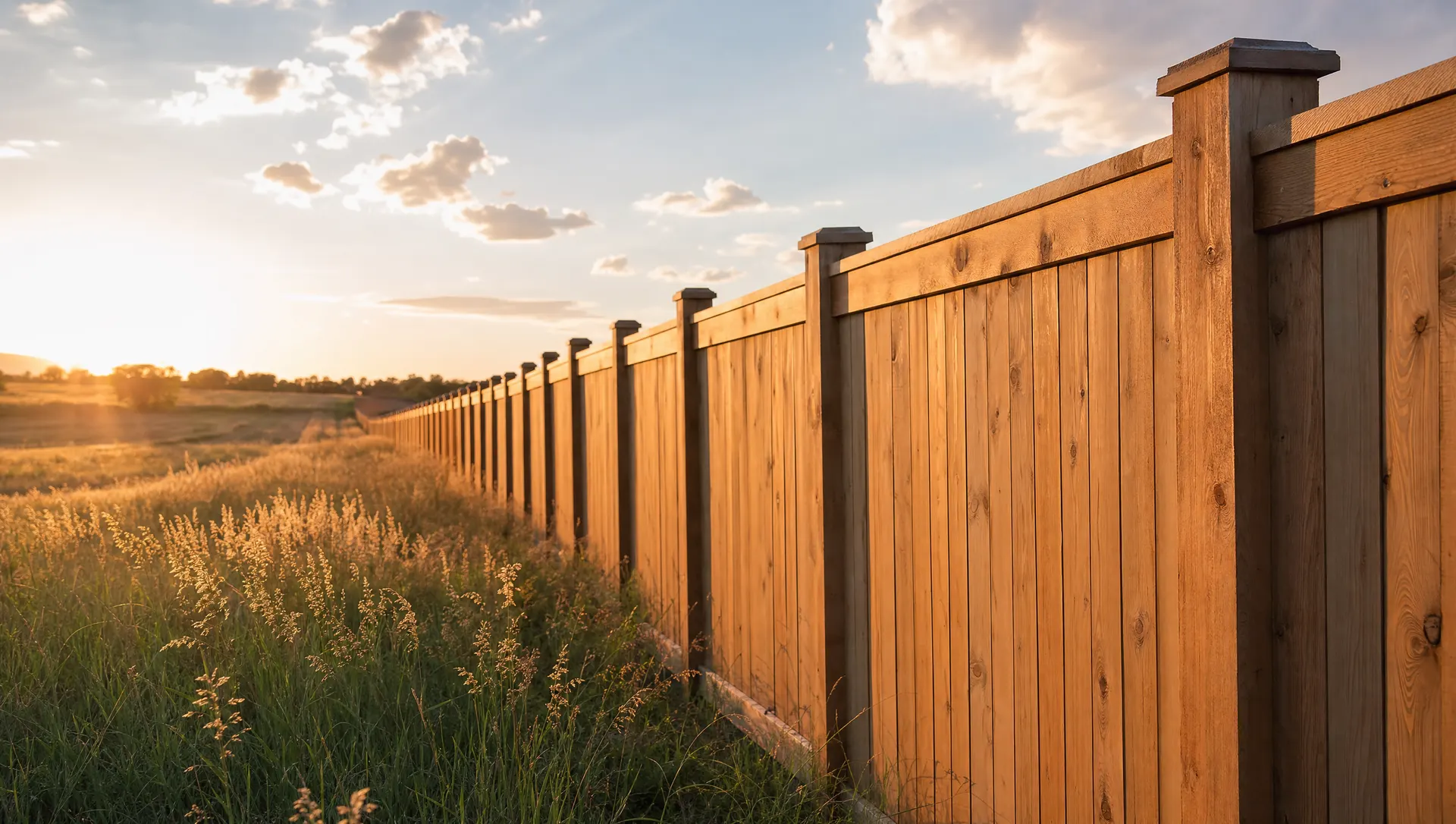
Farm & Ranch Fencing in Jefferson City, MO
Farm and ranch fencing is a different job from a yard fence, and it needs to be treated that way. The goal isn't curb appeal — it's a fence that actually holds livestock, survives years of weather with minimal attention, and doesn't fail at the one point where an animal decides to test it. Jeff City Fencing installs farm and ranch fencing for acreages and working properties around Jefferson City and Cole County, from a small pasture cross-fence to a full perimeter around open ground.
Whether you're fencing in cattle, horses, goats, or just keeping a property line clear and marked, the right fence depends on what's actually on the other side of it.
What's Included in Farm & Ranch Fencing
A farm fence job typically includes some combination of the following, depending on what you're containing and how the ground lays out:
- Woven wire (field fence) installation for general livestock containment — a common all-around choice for mixed operations
- High-tensile smooth or barbed wire runs for cattle on larger acreage, strung tight across braced sections
- Wood or steel corner and brace post assemblies, which carry the tension of the entire wire run and need to be set right the first time
- T-post or wood line posts spaced according to the wire type and terrain
- Farm gates sized for equipment access, livestock trailers, or everyday foot and vehicle traffic
- Clearing brush and trees along the fence line where needed before wire goes up
Corner and brace assemblies are the part of a farm fence that most determines whether it holds up. A line post that leans is a minor problem; a corner post that gives way takes the tension out of an entire run of wire behind it.
Farm & Ranch Fencing in Cole County
Fencing changes character fast once you get out past Jefferson City's in-town lots. Head toward Russellville, Taos, or Wardsville and you're in a mix of pasture, wooded acreage, and working farms where fence lines run hundreds or thousands of feet instead of a hundred feet around a backyard. The economics change too — pricing by the roll of wire and the number of posts makes more sense than a flat per-foot number once a run gets that long.
Cole County's rolling, rocky ground is a real factor on farm fence jobs. Brace and corner posts need solid footing to hold tension, and a rock shelf sitting a foot or two under the surface can turn a straightforward corner assembly into more work than the plan called for. The terrain itself often dictates where a fence line can realistically go — following a ridge or a fence row that's already cleared is usually more practical than forcing a dead-straight line across uneven ground.
Cross-fencing for rotational grazing is a common request from working farms in the area, as is replacing older barbed wire that's sagged or rusted through after years of exposure. Boundary fencing shared with a neighboring farm comes up often too — see our FAQ for general notes on shared boundary fences, though anything involving a dispute or a formal agreement is a conversation for a surveyor or attorney, not us.
When to Call for Farm & Ranch Fencing
Farm and ranch fencing calls typically come from:
- Bringing new livestock onto a property that isn't currently fenced for them
- Replacing old, sagging, or rusted-through barbed wire with something that'll actually hold
- Subdividing an existing pasture for rotational grazing
- Establishing or re-establishing a boundary fence along a property line with a neighboring farm
- Adding or widening a gate for equipment or trailer access
If part of the job is really a yard or homestead fence around the house itself rather than the pasture, privacy fencing or chain link fencing may be the better fit for that section — plenty of acreage properties end up with both a yard fence and a pasture fence.
What Affects the Cost
Farm fencing typically prices out differently than a residential fence, driven by:
- Wire type — woven wire generally costs more than high-tensile smooth or barbed wire per foot, but suits a wider range of livestock
- Post material — wood posts cost more than steel T-posts but often anchor corners more solidly
- Terrain and clearing — brush clearing, tree removal, and rocky or steep ground all add labor time
- Total footage — longer runs typically bring the per-foot cost down compared to a short section
- Gates — farm gates sized for equipment cost more than a standard walk-through gate
We'll walk the ground with you where possible and give a real number based on wire type, terrain, and total footage — not a guess based on acreage alone.
Woven wire, barbed wire, or high-tensile — which is right for me?
It depends on what you're containing. Woven wire is a strong, general-purpose choice for mixed livestock and is harder for smaller animals to get through. High-tensile smooth or barbed wire is typically more economical for cattle on larger acreage. Horses generally do better without exposed barbed wire, so wood board, pipe, or smooth high-tensile tends to be the better fit there.
How far apart do fence posts need to be?
It depends on the wire type and terrain, but line posts on a typical farm fence commonly run anywhere from about 10 to 20 feet apart, with closer spacing on uneven ground or tighter turns. Corner and brace posts don't follow that spacing rule — they're placed at every direction change and get their own braced assembly regardless of the run length.
Who pays for a shared boundary fence with my neighbor?
This varies by local custom and any existing agreement between property owners, and it isn't something we can settle for you — a survey and, where needed, a written agreement or legal advice is the right path if there's any disagreement. What we can do is build to a confirmed line once you and your neighbor know where it actually falls.
Get a Free Quote for Farm & Ranch Fencing
Tell us about the property, what you're containing, and roughly how much ground is involved, and we'll get back fast with a free, straightforward quote anywhere in the Jefferson City area.
Fence Project in Jefferson City?
Tell us about the yard and we'll get back fast with a free, no-pressure quote.